Post Author:
Browne Mortgage Team
Categories:
Date Posted:
February 2, 2026
Share This:
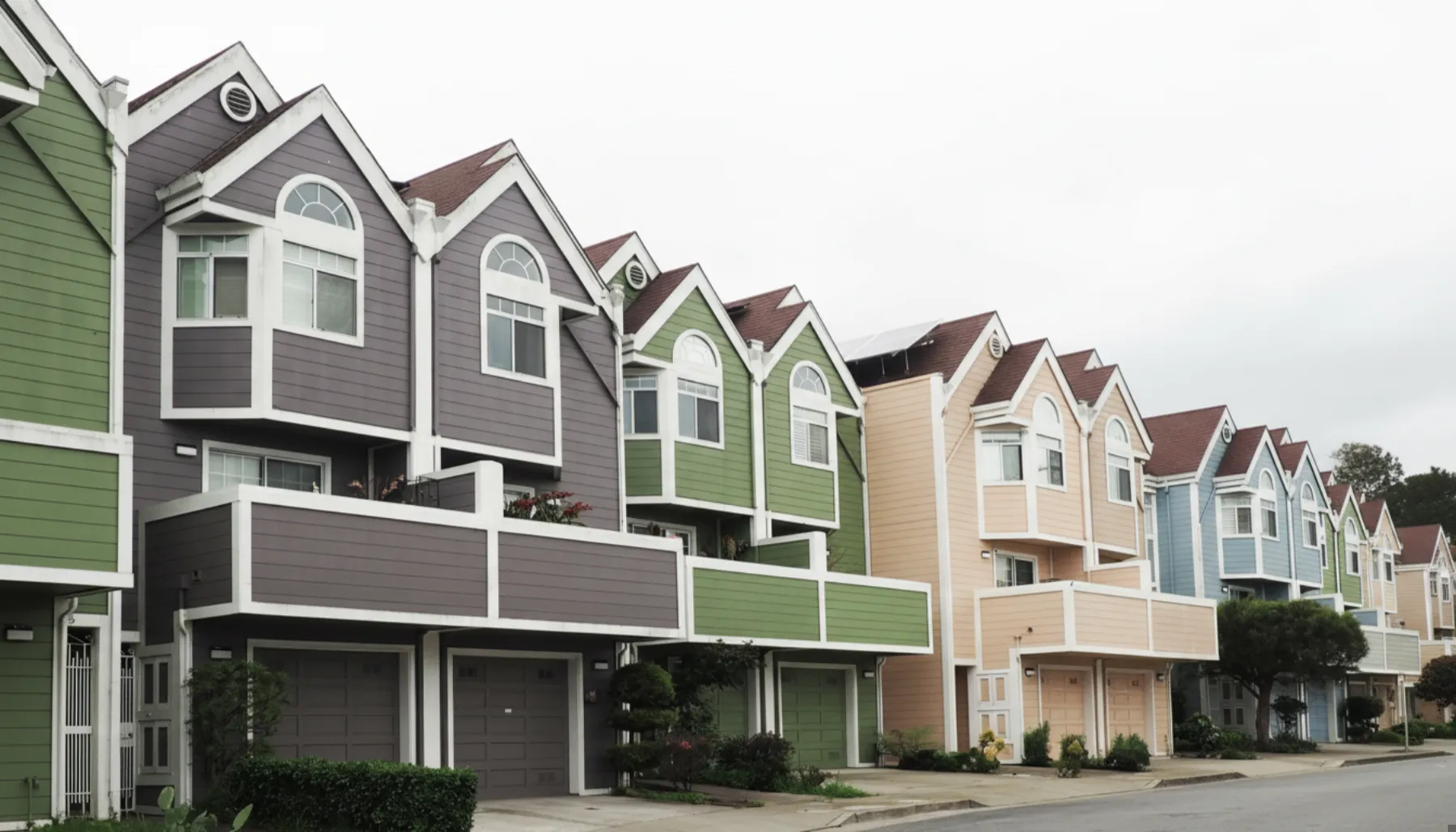
Townhomes represent roughly a third of Chilliwack’s housing market, offering a middle ground between detached homes and condos. For buyers seeking lower maintenance, newer construction, and entry-level pricing, townhomes deliver -but financing them involves different considerations than detached properties. Strata fees, insurance requirements, and lender criteria vary significantly based on the building’s age, management, and location.
Why Townhomes Appeal to Chilliwack Buyers
Price is the obvious draw. Where a detached home in Promontory might list at $850,000, a comparable townhome in the same neighborhood could be $550,000 to $650,000. That $200,000+ difference directly affects qualification, down payment requirements, and monthly carrying costs.
Townhomes also eliminate yard maintenance -a benefit for commuters, retirees, or anyone who’d rather spend weekends hiking Vedder Mountain than mowing lawns. Many newer developments include amenities like playgrounds, visitor parking, and professionally maintained landscaping that would cost significantly more to replicate on a detached property.
Location matters too. Townhome developments tend to cluster in Sardis, Promontory, and Garrison -areas with good access to Highway 1, shopping, and schools. For buyers prioritizing convenience over acreage, townhomes deliver central locations at accessible price points.
How Strata Fees Affect Your Mortgage Qualification
Strata fees directly impact how much you can borrow. Lenders include your monthly strata payment when calculating debt service ratios, the same way they count property taxes and heating costs. A $300/month strata fee reduces your maximum mortgage by roughly $60,000 to $70,000, depending on rates and your income.
That said, strata fees aren’t purely negative from a qualification perspective. They cover insurance, exterior maintenance, landscaping, and often utilities like water and garbage collection -costs you’d pay separately on a detached home. When comparing total monthly costs, townhomes with reasonable strata fees often come out ahead of detached properties.
Lenders scrutinize strata corporations carefully. They want to see adequate contingency reserve funds (typically 25% or more of annual operating budget), no pending special assessments, and evidence of proper building maintenance. A well-managed strata with healthy reserves makes mortgage approval straightforward. A strata with deferred maintenance, low reserves, or ongoing disputes can trigger lender concerns or outright declines.
Strata Insurance Changes and Lender Requirements
BC’s strata insurance market changed significantly in recent years. Premiums increased, deductibles rose from $10,000 to $50,000 or even $250,000 for water damage, and some buildings struggled to secure coverage at all. These changes directly affect mortgage lending.
Most lenders now require evidence of adequate strata insurance before approving a mortgage. They’ll review the building’s insurance policy, checking coverage limits, deductible amounts, and whether the strata has purchased deductible insurance (also called “loss assessment coverage”) to cover the gap if a claim occurs.
High deductibles create financial risk for owners. If a water leak causes $100,000 in damage and the strata’s deductible is $50,000, the strata corporation must assess owners to cover that amount. Lenders know that a surprise $2,000 or $5,000 assessment can push borrowers into financial stress, so they’ve tightened criteria for buildings with very high deductibles.
In Chilliwack’s market, newer developments (built after 2010) typically have better insurance terms and lower premiums than older wood-frame buildings. Concrete construction, sprinkler systems, and robust building envelope maintenance all help secure favorable insurance, which in turn makes mortgage approval easier.
Comparing Chilliwack’s Townhome Neighborhoods
Sardis Townhomes
Sardis holds Chilliwack’s largest concentration of townhome developments, spanning everything from 1990s wood-frame builds to brand-new construction near Vedder Road. Prices range from $450,000 for older units needing updates to $650,000+ for recent builds with modern finishes.
Strata fees in Sardis vary widely. Older complexes with minimal amenities might charge $200-$250/month, while newer developments with landscaping, playgrounds, and higher reserve contributions run $300-$400/month. Lenders generally approve Sardis townhomes without issue, provided the strata is well-managed and insurance is in order.
Location-wise, Sardis offers proximity to shopping (Sardis Town Centre, Cottonwood Mall), schools, and quick highway access. For first-time buyers or families prioritizing convenience, Sardis townhomes deliver walkability and central location.
Promontory Townhomes
Promontory’s hillside location and mountain views command a premium. Townhomes here typically list $550,000 to $700,000, with strata fees reflecting newer construction and hillside lot challenges -expect $350-$450/month.
Most Promontory developments were built in the past 15 years, meaning modern building codes, better insulation, and lower immediate maintenance needs. Insurance tends to be more affordable, and lenders view Promontory properties favorably due to strong demand and well-capitalized strata corporations.
The tradeoff is commute time. Promontory sits higher and further from Highway 1, adding 5-10 minutes to trips into Sardis or points west. For buyers who work locally or value views over commute speed, that’s a worthwhile exchange.
Garrison Village and Garrison Crossing
Garrison developments blend townhomes with commercial space, creating a walkable neighborhood with cafes, shops, and services within the complex. Townhomes here range $500,000 to $650,000, with strata fees typically $300-$400/month.
Lenders like Garrison properties for their strong sales history and active market. The mixed-use design attracts renters as well as owners, giving investors an option if they decide to relocate. Proximity to Vedder River trails and Cultus Lake also appeals to outdoor-focused buyers.
One consideration: mixed-use strata corporations (residential plus commercial) can complicate financing if the commercial portion is large or struggling. Most Garrison developments maintain a healthy residential majority, but it’s worth confirming the commercial-to-residential unit ratio before making an offer.
Lender Restrictions and What to Watch For
Not all townhomes qualify for standard lending. Certain factors trigger restrictions or require alternative financing:
Rental restrictions: Some strata bylaws limit rentals to a certain percentage of units (e.g., no more than 25% can be rented at any given time). If you’re buying as an investment or want flexibility to rent the unit in the future, confirm the strata’s rental policy and current rental percentage. Lenders also care -buildings with very high rental percentages (over 40-50%) may face restricted lending options.
Leasehold vs. freehold: Nearly all Chilliwack townhomes are freehold (you own the land under your unit). Leasehold properties, where you lease the land long-term, face tighter lending criteria and lower resale values. Always confirm land ownership before making an offer.
Age and condition: Townhomes built before 1990 may have knob-and-tube wiring, aluminum wiring, or deferred envelope maintenance. Lenders often require updated electrical systems and engineering reports on older buildings. If you’re considering an older complex, budget for a thorough pre-purchase inspection and expect potential lender pushback.
Special assessments: Active or pending special assessments (charges levied by the strata for major repairs or upgrades) raise red flags. Lenders want to know the assessment amount, payment schedule, and whether it’s already factored into the strata’s financial plan. Large unfunded assessments can delay or derail mortgage approval.
Down Payment and Mortgage Insurance
Townhomes follow the same down payment rules as other residential properties. You need 5% down on the first $500,000 of purchase price and 10% on amounts between $500,000 and $1 million. A $600,000 Promontory townhome requires $35,000 minimum down.
With less than 20% down, you’ll pay for mortgage default insurance through CMHC, Canada Guaranty, or Sagen. Insurance premiums range from 2.8% to 4.0% of the mortgage amount, depending on your down payment size. These premiums are typically added to your mortgage balance rather than paid upfront.
Mortgage insurance actually benefits buyers in some scenarios. Insured mortgages often qualify for lower interest rates (sometimes 0.10% to 0.20% less than uninsured mortgages), and they’re easier to approve for buyers with lower credit scores or non-traditional income. For first-time buyers without 20% down, insurance opens doors that would otherwise stay closed.
Budgeting for Total Monthly Costs
When comparing townhome offers, calculate your total monthly outlay:
- Mortgage payment (principal + interest)
- Property tax: Roughly $200-$300/month for a $600,000 townhome in Chilliwack
- Strata fee: $250-$450/month depending on building
- Home insurance: $80-$150/month (you insure your unit’s interior; the strata insures the building)
- Utilities: Electricity and gas (some stratas include water/sewer in fees)
A $600,000 townhome with 10% down ($60,000) at 5.5% over 25 years results in a mortgage payment around $3,350/month. Add $250 property tax, $350 strata fee, and $100 insurance, and your total monthly cost is approximately $4,050 before utilities.
Compare that to a $750,000 detached home: $4,650/month mortgage, $300 property tax, $200 utilities, and no strata fee -but you’re responsible for all exterior maintenance, landscaping, and repairs. Total monthly cost is similar, but the detached home carries additional unpredictable costs (roof replacement, furnace repairs) that strata fees cover on a townhome.
Should You Buy a Townhome or Wait for Detached?
There’s no universal right answer. Townhomes make sense if you value:
- Lower purchase price and smaller down payment
- Reduced maintenance responsibility
- Central locations and walkable neighborhoods
- Newer construction with modern layouts and finishes
Detached homes make sense if you prioritize:
- Full control over property decisions (no strata approval needed for renovations)
- Larger yard space for kids, pets, or hobbies
- No strata fees or shared decision-making
- Greater long-term appreciation potential
For buyers stretching to afford Chilliwack’s market, townhomes offer a legitimate path to ownership. You can build equity, benefit from market appreciation, and upgrade to a detached property later if priorities change. Waiting years to save a larger down payment means missing years of equity growth -something worth weighing carefully.
Getting Pre-Approved for a Townhome Mortgage
Before making offers, secure a mortgage pre-approval. Pre-approval confirms your maximum purchase price, locks in a rate, and shows sellers you’re a qualified buyer.
Bring documents showing income, down payment savings, and credit history. If you’re looking at specific buildings, ask your mortgage broker to review the strata’s financial statements, insurance policy, and recent AGM minutes. Identifying potential red flags before making an offer saves time and protects your deposit.
Also discuss current mortgage rates and whether fixed or variable makes sense for your situation. Rates change frequently, and timing your rate hold can save thousands over your mortgage term.
Working With a Chilliwack Mortgage Broker
A broker familiar with Chilliwack’s townhome market knows which lenders are comfortable with specific developments, how to navigate strata documentation, and what red flags to watch for. They can also advise on timing, neighborhood comparisons, and whether a particular building’s strata financials pass muster.
For more information on financing a townhome in Chilliwack, or to start your pre-approval, contact our office at 604-795-2933. We’ll help you understand your options and find the right property for your budget and lifestyle.