
Post Author:
Categories:
Date Posted:
February 11, 2026
Share This:
A Different Way to Think About Your Mortgage
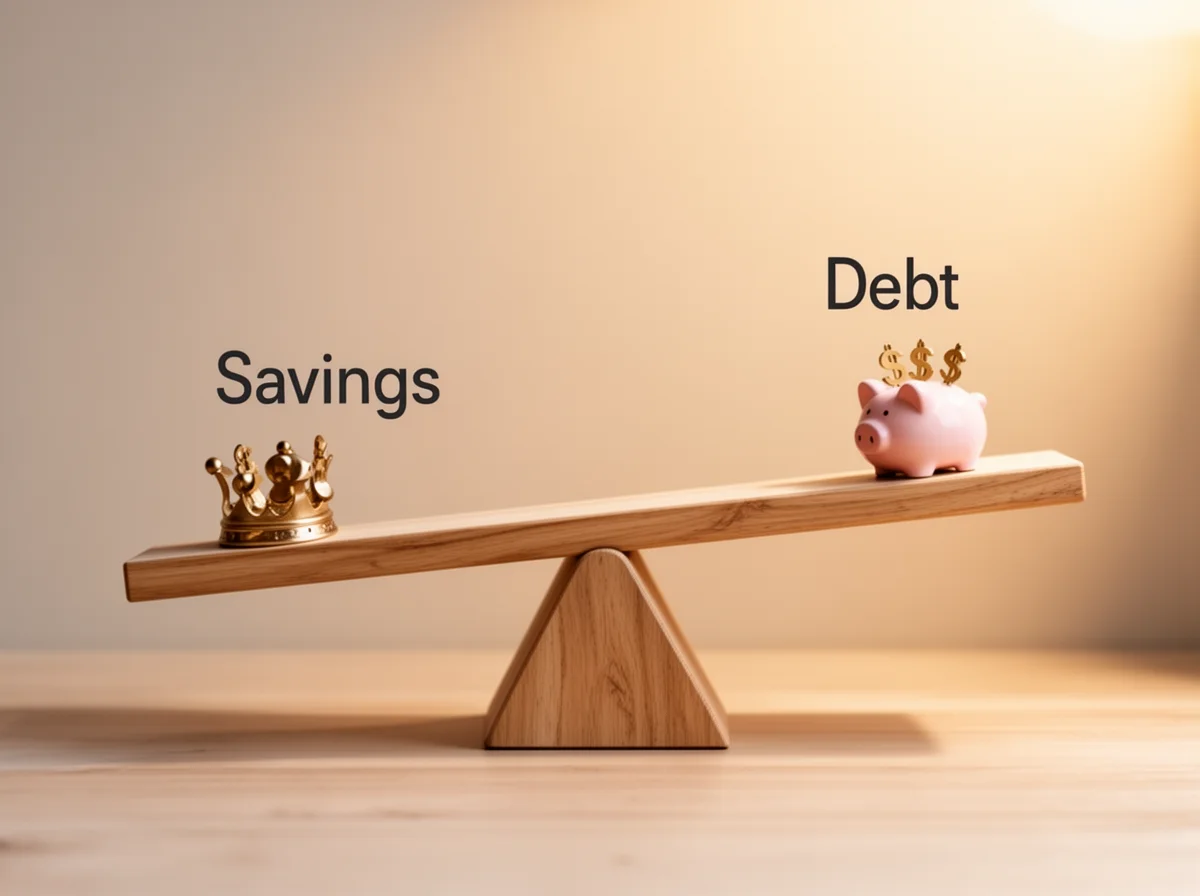
Most homeowners think of their mortgage and their savings as two separate things. The mortgage sits in one column, the savings in another, and never the two shall meet. But what if your savings could work to reduce the interest on your mortgage without actually paying it down?
That is the idea behind an offset mortgage. It is a strategy that links your savings to your mortgage so that you pay interest only on the difference between what you owe and what you have saved. It is not widely available in Canada through traditional lenders, but the concept applies in modified forms, and understanding it can change how you think about managing debt and savings.
How Offset Mortgages Work
An offset mortgage links a savings account to your mortgage. The bank calculates interest on the difference between your mortgage balance and your savings balance.
If you owe $400,000 on your mortgage and have $50,000 in savings, you pay interest on $350,000 instead of $400,000. Your savings are not used to pay down the mortgage. They are still in your account, accessible if you need them. But they effectively reduce your interest charges.
Over the life of a mortgage, this can save a significant amount. On a $400,000 mortgage at 5%, having $50,000 in offset savings saves you roughly $2,500 per year in interest. Over 25 years, that adds up to more than $60,000.
Why It Makes Sense
The logic is straightforward. Savings accounts in Canada currently pay somewhere between 2% and 4% interest. After tax, your effective return on savings is even lower. Meanwhile, your mortgage charges 5% or more.
If your savings earn 3% before tax but your mortgage costs 5%, your money is working harder by reducing your mortgage interest than by sitting in a savings account. An offset arrangement captures this difference automatically.
There is also a tax advantage. Interest earned on savings is taxable. Interest saved on your mortgage is not. A dollar saved on mortgage interest is worth more than a dollar earned in savings interest, especially if you are in a higher tax bracket.
The Canadian Reality
True offset mortgages are rare in Canada. Most major banks do not offer them. However, similar benefits can be achieved through other products and strategies.
A readvanceable mortgage combines a traditional mortgage with a home equity line of credit. As you pay down the mortgage, the line of credit grows by the same amount. You can use the line of credit as a savings offset by depositing cash into it and withdrawing as needed.
The Manulife One account is one of the few Canadian products that functions similarly to an offset mortgage. It combines your mortgage, savings, and chequing into a single account, and you pay interest only on the net balance.
Even without these specific products, you can achieve a similar effect by making lump-sum payments against your mortgage principal and then using a line of credit for emergency access to funds. The net effect is the same: your savings reduce your mortgage interest.
Who Benefits Most
Offset strategies work best for homeowners who maintain significant savings balances. If you keep $10,000 in savings, the offset benefit is modest. If you keep $100,000 or more, the savings can be substantial.
They also work well for self-employed individuals or business owners who need to maintain large cash reserves for business expenses. Instead of that cash sitting idle in a business account earning minimal interest, it offsets mortgage interest.
Homeowners who are risk-averse benefit too. An offset strategy gives you the benefit of lower interest costs without the permanence of actually paying down your mortgage. Your money stays accessible for emergencies while still working to reduce your costs.
Potential Drawbacks
Offset mortgages and similar products sometimes come with higher rates than conventional mortgages. The rate premium might be 0.25% to 0.5% higher. You need enough savings to offset this premium before the strategy becomes beneficial.
They can also be more complex to manage. Having your mortgage, savings, and chequing in one account requires discipline. It is easy to spend money that should be offsetting your mortgage if the boundaries between accounts are blurred.
Finally, the opportunity cost matters. If you could invest your savings and earn a return higher than your mortgage rate, the offset strategy might not be the best use of your money. Investing carries risk, but for some homeowners, the potential return justifies it.
Making It Work in Practice
Even without a formal offset product, you can implement the core principle. Here is a practical approach.
First, maximize your prepayment privileges. Most mortgages let you prepay 10% to 20% of the original balance each year. Use this to reduce your principal whenever you have excess cash.
Second, consider a readvanceable mortgage that gives you access to a line of credit as your equity grows. This gives you the flexibility to access funds if needed while keeping your principal low.
Third, deposit bonuses, tax refunds, and other windfalls directly against your mortgage. The interest savings compound over time and can shave years off your amortization.
The Bottom Line
The offset mortgage strategy is about making your money work smarter. Instead of keeping savings and mortgage debt in separate silos, you use one to reduce the cost of the other.
Whether through a formal offset product, a readvanceable mortgage, or simply aggressive prepayment, the principle is the same: every dollar of savings that reduces your mortgage interest saves you more than a dollar sitting in a savings account.
If you are interested in exploring offset strategies for your mortgage, the team at Browne Mortgage can help you evaluate your options. Contact us at 604-850-5877 in Abbotsford or 604-795-2933 in Chilliwack.